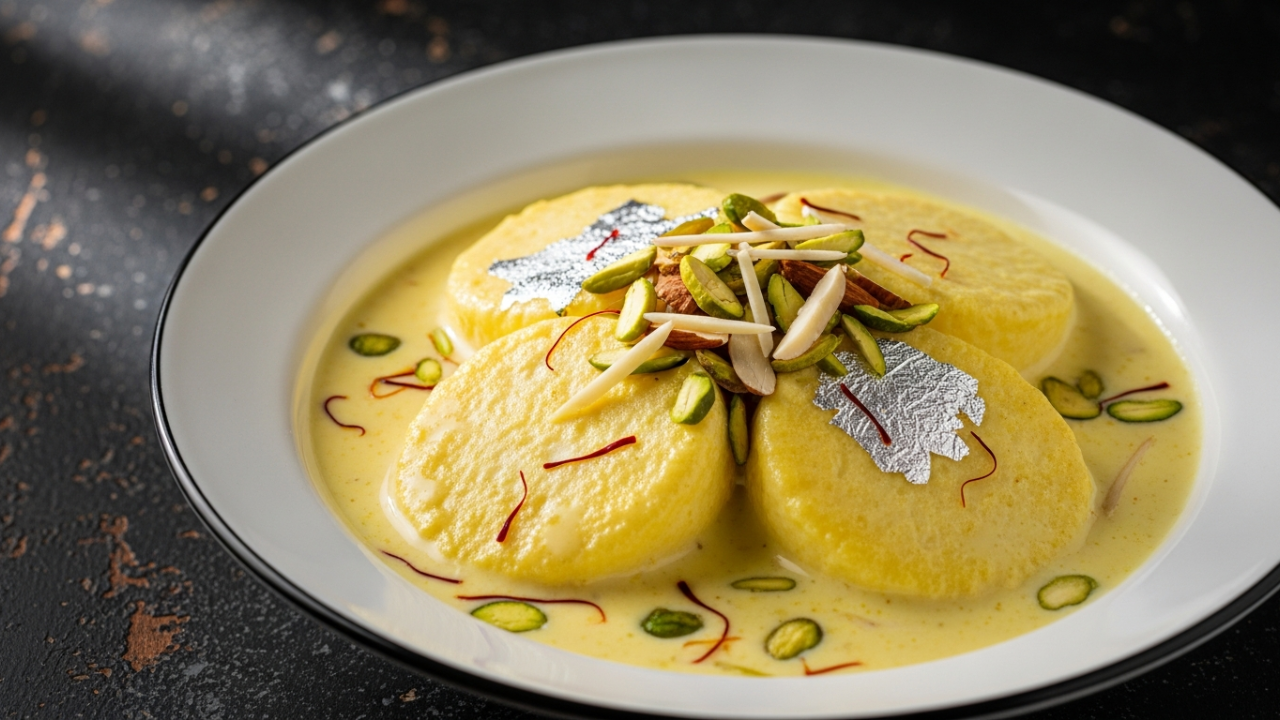
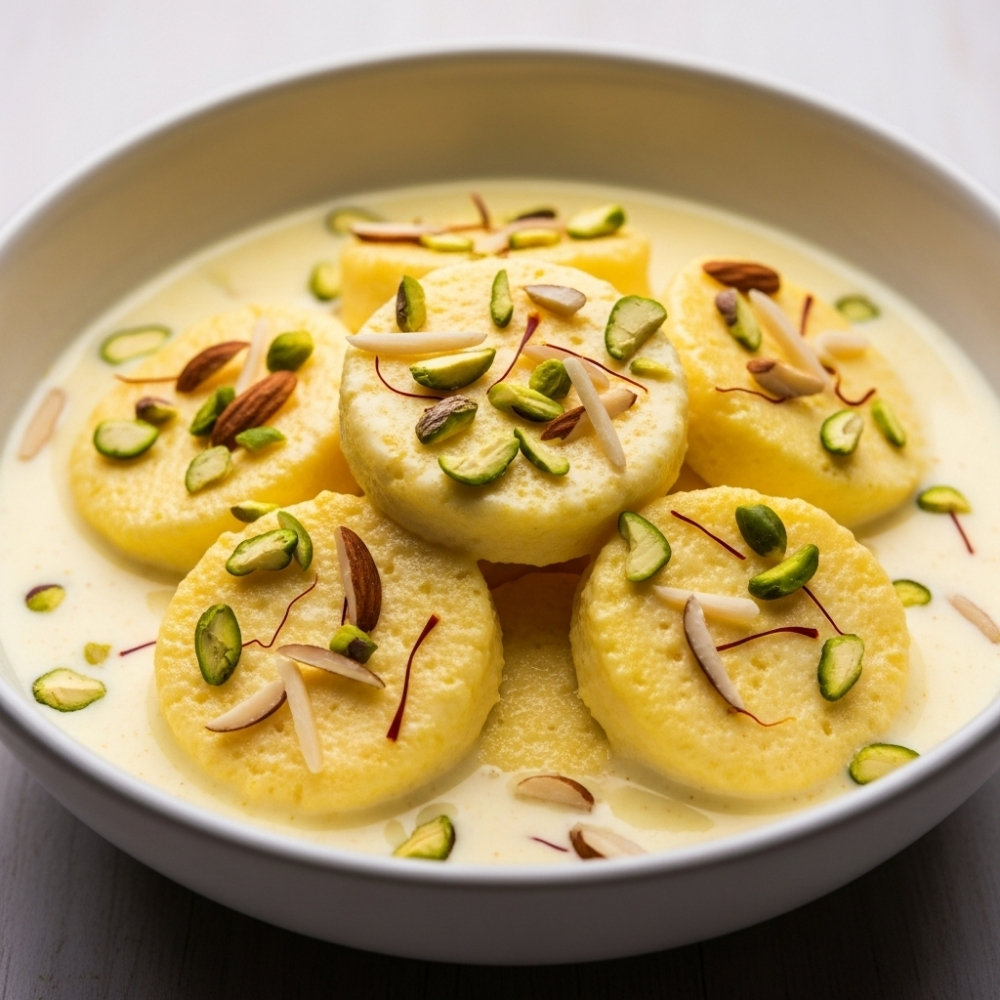
Ras Malai is cheese dumplings in cream sauce. This is a popular Indian dessert and takes a long time to prepare the traditional way. I came up with some shortcuts and ended up with this recipe which tastes exactly the same as traditional Ras Malai.
Yield: 8
Prep Time: 55minutes mins
cool/chill time: 2hours hrs
Total Time: 55minutes mins
A Ras Malai you can’t mess up!
Sneaking cold Ras Malai from the fridge is a pleasure of life I don’t want you to miss out on. Those soft, tender, fluffy dough balls soaked in luscious, creamy milk. So flavourful and satisfying – I just can’t get enough!
Traditionally, Ras Malai is made with curdled, strained milk (like paneer), but this genius milk powder version has been popular in recent decades for good reason…it’s quick and easy, and with a few tips, it’s practically fool proof.
Ingredient Notes + Recipe Testing
The full ingredients list is here below and also here are notes on some of them:
Ingredients
Milk:
4 1/2 cups whole milk
1 12-oz (354 ml) can evaporated milk
1/4 cup + 1 tbsp (64 g) sugar , I use pure cane sugar, the fine, light brown kind
3-4 cardamom pods, slightly cracked open
small pinch of saffron strands, optional
Dough Balls:
1 cup (100 g) whole milk powder, Note 1
2 tsp (6 g) all-purpose flour
1 tsp (4 g) baking powder
pinch fine ground cardamom powder, Note 2
2 tsp ghee, sub neutral oil
2 tsp neutral oil, such as avocado oil
1 small egg, whisked
Garnish:
finely chopped pistachios
finely chopped blanched almonds
saffron strands or dried edible rose petals, optional – I normally skip
Dough Balls
Milk powder: I tested this with whole milk powder (Nido is the most popular brand). My aunt used to make this with nonfat milk powder and she says it also works – will update once I test!
All-purpose flour: Adds structure and makes them shapely and smooth on the surface. I find using too little all-purpose flour (we started with 1/2 tsp) makes them eggy or rubbery, but too much can make it harder for them to cook through.
Baking powder: Baking powder here does what it does in Dahi Bhallay – it softens them and makes them light and fluffy, but using too much makes the surface rougher, more crumbly (bhurbhura).
Egg: I use a cold egg straight from the fridge and have found no difference when using one at room temperature.
Milk & Garnish Ingredients
- Evaporated milk: Adds richness to the milk mix. You can vary this as you wish – I’ve also tested with a smaller, 5 oz can, to keep the milk base lighter in color.
- Note on Khoya: My recipe tester suggested adding 60g khoya/mawa (both store-bought and homemade work) to add more richness and depth to the milk mixture. If you’d like to use it, add it *after* cooking the dough balls. Remove the Ras Malai balls from the pan, then boil the khoya with the milk, stirring constantly, until it dissolves. You may need to add another 1/2 cup water if it thickens too much. Pour the milk mixture over the cooked Ras Malai balls.
- Garnish: I usually only garnish with nuts, but saffron adds a little pop of colour. If you have dried/edible rose petals on hand, they would add a nice touch for garnish.
How to make Ras Malai
Type of pan to use: You want to use a wide pan, large enough to fit the Ras Malai balls in one layer once puffed. If they don’t have enough space, they’ll deform in shape and start sticking to each other. I use a non-stick pan to prevent the milk from sticking.
1.Bring the milk ingredients to a gentle boil. At this stage, the milk is not likely to scorch. While waiting for milk to boil, I gather and start mixing dry ingredients for dough balls. If you’re in a hurry, cover with a lid ajar to make it come to a boil faster (mine takes around 13-15 minutes). Once it comes to a boil, reduce heat and let it simmer. Stir occasionally, being mindful to scrape the sides and bottom of the pan, while you move on with the recipe.
2.Combine the dry ingredients. Gradually add the ghee and oil mixture to the dry ingredients, stirring as you go. I use my hands to mix but a spoon (or even a mixer on low speed) should work fine.
3.Add the egg and continue mixing. At first, the dough will be crumbly and dry-looking, but as you continue to mix for 1-2 minutes, it’ll start coming together. It should form into a cohesive ball that’s moist with the ghee/oil. (Many recipes suggest resting the dough here to fully incorporate the egg. But I find if you mix it thoroughly, you can skip the rest time.)
4.Oil your hands (this helps make a smoother surface) and make small teaspoon sized balls or discs, around 5g each – no need to weigh them as that can ‘weigh’ you down. Try to get them smooth so there are no cracks on the surface. Cracks on the surface or edges of the shaped Ras Malai = craggy edges once cooked + more prone to falling apart.
5.Adjust heat so milk is at a very gentle simmer. Carefully drop all the dough balls into the gently simmering milk at the same time. Do not stir or touch the dough balls. It takes about a minute for the balls to begin to puff up. Cover the pot and allow them to puff on medium heat for 4-5 minutes. It’s okay if milk boils up in the covered pan, but it’s an indication that you need to turn heat down.
Note on Milk Scorching: Even if you use a nonstick pan, in any milky dessert there’s the risk of milk scorching. Milk usually starts sticking to the pan not while coming to a boil, but while simmering and thickening. To prevent scorching, keep the heat low and stir or whisk regularly. If it does scorch:
-Use a mini milk strainer to skim off bits of brown film.
-If your milk mixture has too much brown film, gently move the cooked Ras Malai balls to your serving bowl, then pour the milk through the strainer into the bowl.
-If the bottom only is scorched, you can transfer to a different pan.
6.Uncover the pot and gently flip, then cover and cook again for 12-14 minutes. At this point if it thickens too much, feel free to add a bit of milk (~½ cup).
7.Remove from heat and allow the Ras Malai to rest, covered, for at least 5 minutes before transferring, or until cooled to room temperature.
- One thing to watch out for is letting it rest while the stove is still hot. This can cause scorching on the bottom.
8.Ras Malai is best served chilled – the flavour improves, the texture improves, everything improves! Garnish with pistachios, almonds, and saffron strands/dried petals (if you’d like) before serving.
Troubleshooting
This is one of those recipes, like Dahi Bhallay or Roti, where a quick troubleshooting guide just makes sense.
| Problem | What May Have Gone Wrong | Solution |
| dough balls disintegrated in milk | dough may have dried out while rolling into balls, mixture may not be mixed well enough or have air pockets, may have stirred dough balls while they were cooking | work quickly to form into balls, cover the balls while rolling, do not stir dough balls with spoon |
| cracks on the surface/edges | mixture may have dried out, not rolled smoothly enough | use oil in your hand to shape |
| hard, uncooked centers | too much all-purpose flour in the dough, milk too hot while cooking (while covered) | to prevent, prick each ball with toothpicks, a trick we picked up from cook over gently simmering milk |
| cooked dough balls too eggy or dense | not enough flour and/or baking powder in the dough | use recommended quantities of flour and baking powder, refrigerate for a longer time |
| milk clotting or scorching | heat too high while milk mixture is simmering | use a milk strainer to scoop out any brown bits |
Nutrition Facts
| Nutrition | Amount |
|---|---|
| Calories | 303 kcal |
| Carbohydrates | 28 g |
| PROTEIN | 13g |
| Fat | 16g |
| Saturated Fats | 9 g |
| Polyunsaturated Fats | 1g |
| Monounsaturated Fat | 5 g |
| Trans Fat | 0.003 g |
| Cholesterol | 71mg |
| Sodium | 229 mg |
| Potassium | 596 mg |
| Fiber | 0.3 g |
| Sugar | 27 g |
| Vitamin A | 529 IU |
| Vitamin C | 3mg |
| Calcium | 489 mg |
| Iron | 0.5 mg |